Marco’s Introduction — Polenta al Forno with Fontina, Roasted Mushrooms & Truffle Oil ✨
There are evenings in the kitchen when the world feels slower, softer—when the memories from my childhood in Ladispoli rise like steam from a simmering pot. Polenta al Forno is one of those dishes that pulls me backward and forward at the same time: backward into the wooden warmth of my Nonna’s kitchen, and forward into the quiet sophistication I try to bring to EsoterrisTable.
To me, this dish is the perfect marriage of Italian rustic comfort and the elegance of a candlelit trattoria. The creamy baked polenta forms a golden bed—simple, humble—then Fontina melts into it like moonlight pooling between hills. And above it all, the roasted mushrooms settle like forest secrets, carrying with them the scent of earth after rain. When I finish the dish with a drizzle of truffle oil, it feels as though I’m anointing the meal with a little gratitude for the path that brought me here.
Hidden inside this dish is the tarot’s Temperance—the art of blending the simple with the sublime, the familiar with the extraordinary. Just as the card teaches, the flavors balance each other effortlessly. Nothing shouts; everything harmonizes.
Origins of Polenta — As Marco Remembers It
Polenta is older than any chef alive, older even than most stories told around Italian tables. In the north—Piedmont, Lombardia, the Aosta Valley—polenta was once the daily bread of farmers, shepherds, and wanderers. My Nonna used to say that polenta kept Italy warm through winters when nothing else grew, and that stirring a pot of it was “like stirring the heartbeat of the house.”
Back then, it wasn’t made with corn but with whatever grains were available—barley, millet, buckwheat. Simple, sturdy, dependable. Over time polenta became a symbol of comfort, of survival, of home. Even nobles fell under its charm, dressing it with cheeses, herbs, mushrooms, and sauces until it traveled from the farm to the palace.
Today, in my kitchen, I honor that history. Each spoonful feels like a bridge between past and present—a reminder that no matter how refined the dish becomes, its soul is always humble.
Cultural Significance — As Told Through Marco’s Kitchen
In Italy, food doesn’t just gather people. It binds them.
Polenta, above all, is a communal dish. I remember winter nights when the entire family took turns stirring the pot—one person holding the wooden spoon, another pouring the cornmeal slowly in a golden ribbon, another sharing a story that made us laugh until our sides ached. There is something sacred in that rhythm, the way the kitchen fills with warmth before the dish is even done.
Polenta al Forno, though baked rather than simmered endlessly on the stove, carries the same spirit. It’s a dish for gatherings—for friends who arrive unannounced, for quiet evenings with someone you love, for nights when the world outside feels cold and you need something that tastes like belonging.
Unique Ingredients — Through Marco’s Eyes
Each ingredient in this dish has its own personality, its own history, its own place in the story:
Polenta
Choose a coarse cornmeal if you want something rustic and sturdy, fine if you want smooth silk. As it cooks, it swells slowly, absorbing water until it becomes velvety—patient, forgiving, grounding. The Root Chakra in edible form.
Fontina
Ah, Fontina—born in the misty mountains of the Aosta Valley. It melts with such devotion that sometimes I think it was created by someone who believed cheese should behave like love: warm, enveloping, generous. When it bakes into polenta, the two become inseparable.
Roasted Mushrooms
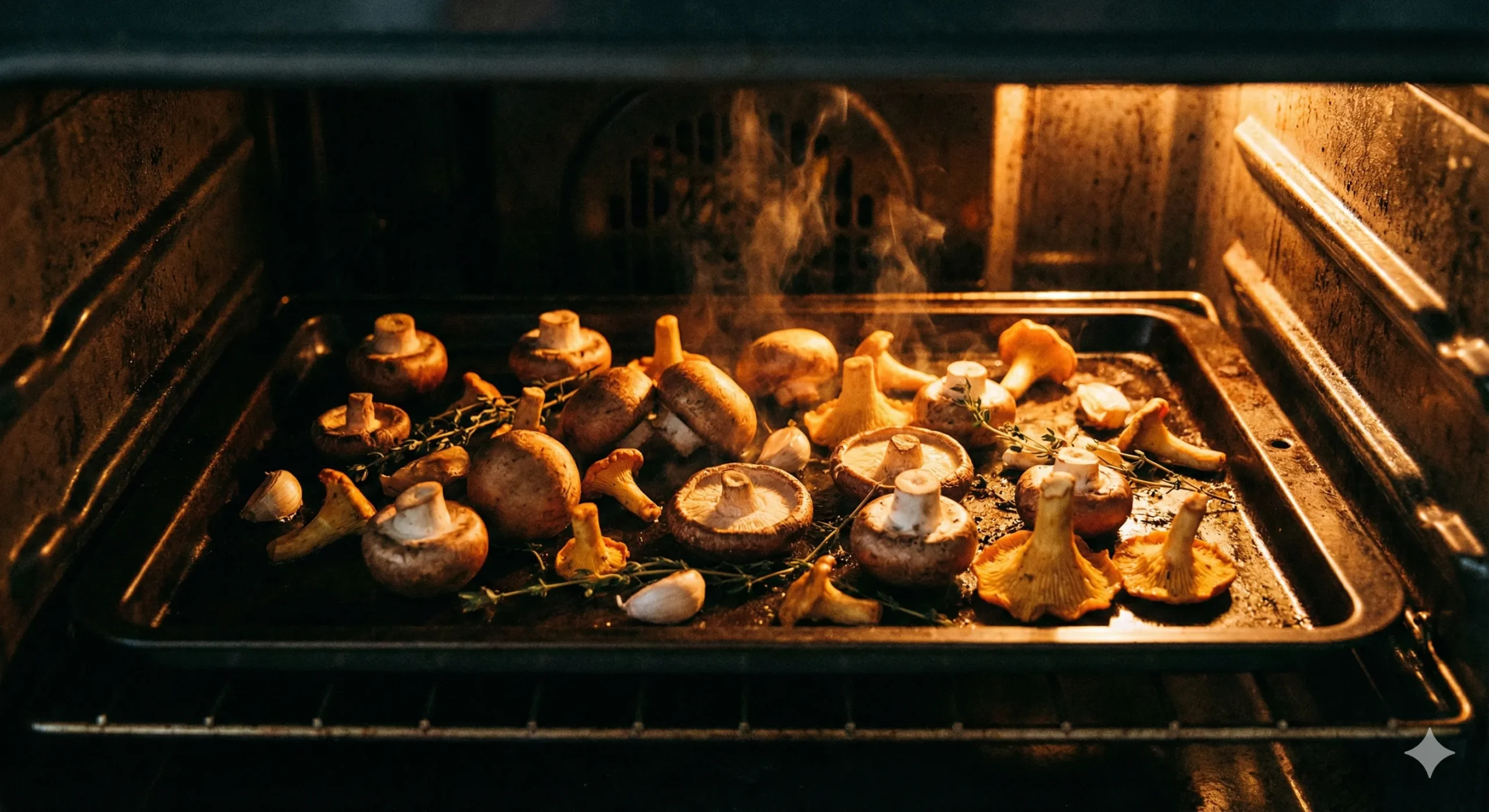
When mushrooms roast, they release their secrets. Their sweetness deepens, their edges caramelize, their aroma fills the kitchen in a way that makes me close my eyes for a moment. I often use a mix—cremini for earthiness, shiitake for depth, and wild mushrooms when the season gifts them.
Truffle Oil
This is the whisper that changes everything. A drizzle, no more, before serving. Suddenly the dish becomes luxurious, almost sensual. The aroma lifts the flavors as though the forest itself exhaled onto the plate. It is the perfect finishing note—an indulgence that doesn’t overwhelm.