INTRODUCTION — Marco’s Story Version
Green beans, humble as they seem, have always followed me like small green threads woven through my life. I still remember the summers in Ladispoli—my nonna standing barefoot in the garden, snapping fagiolini with a rhythm that sounded almost like prayer. “La semplicità è la magia più grande,” she would say. Simplicity is the greatest magic.
When I prepare this dish now, in my quiet California kitchen, it feels like a bridge between worlds: the boy who watched the Mediterranean light shimmering on his grandmother’s hands, and the man who has learned that even the smallest ingredient can carry entire stories.
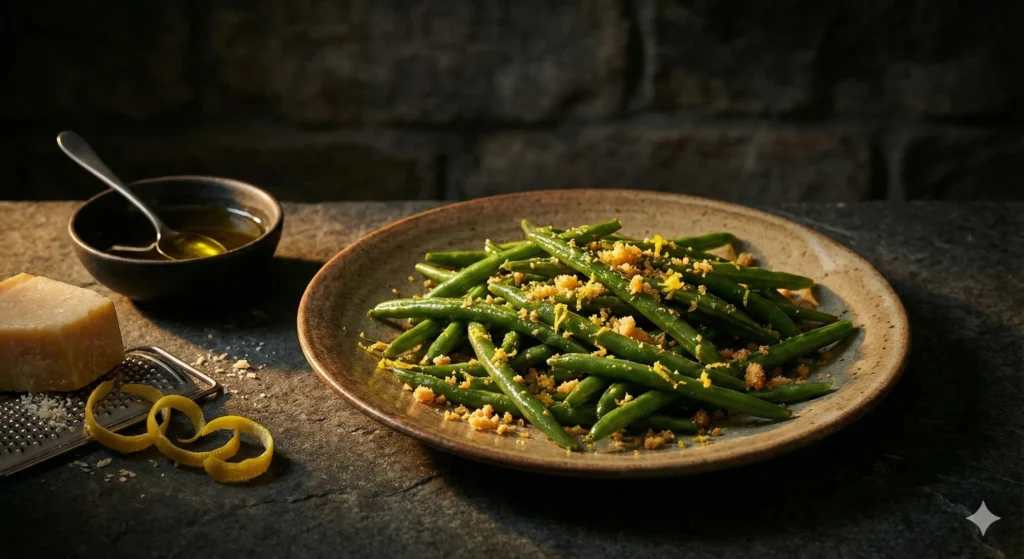
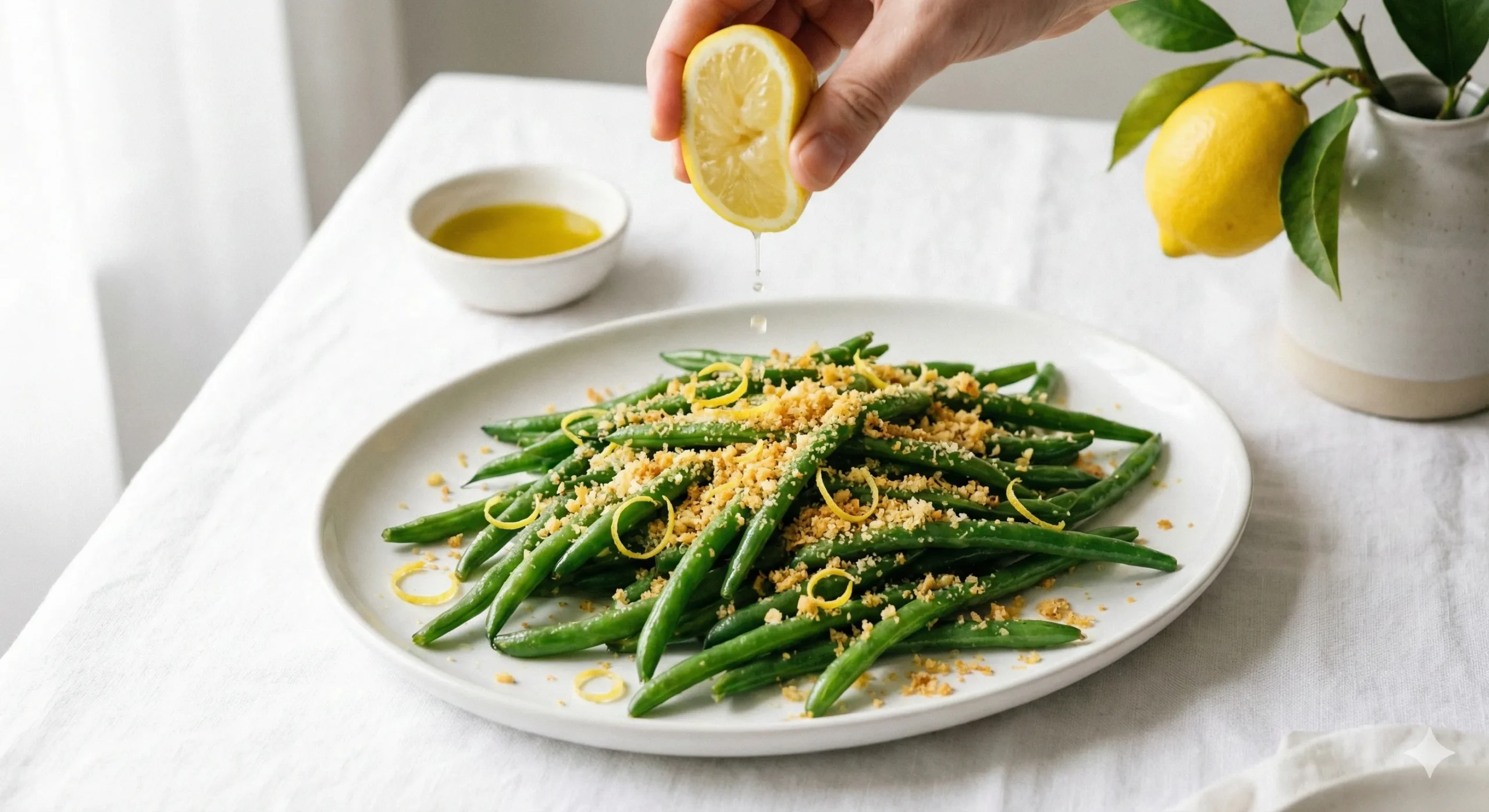
These Sicilian-style green beans, bright with lemon zest and crowned with golden Parmesan crumbs, are my way of honoring that lineage. A dish born from the earth, yet lifted by sunlight—fresh, vibrant, and alive.
⭐ ORIGINS AND CULTURAL SIGNIFICANCE — Marco’s Voice
Sicilian cuisine is a map of the island’s long and storm-tossed history. Arab sweetness, Greek brightness, Roman order, Spanish fire—every culture left something behind, and all of it simmers together in the kitchens of Sicilian families.
Green beans—fagiolini—have always thrived along those Mediterranean winds. In Sicily, they are not treated as an afterthought; they stand proudly on the table beside swordfish, caponata, and citrus salads. Vegetables are protagonists, not supporting characters.
I learned this truth during a summer spent in Ragusa with an aunt I barely knew. She served me a plate of green beans so fragrant with lemon I felt, just for a moment, that the sky had cracked open and poured sunlight over the dish. “Mangia,” she urged. “This is how we share life.”
That spirit stayed with me. Whenever I cook this recipe for friends—or quietly for myself—it becomes a small celebration of connection. A reminder that food is how Sicilians say “You matter.”
And that includes you, sitting before your plate.
⭐ UNIQUE INGREDIENTS AND FLAVORS — Marco Explains
What makes this dish sing is not complexity but intention.
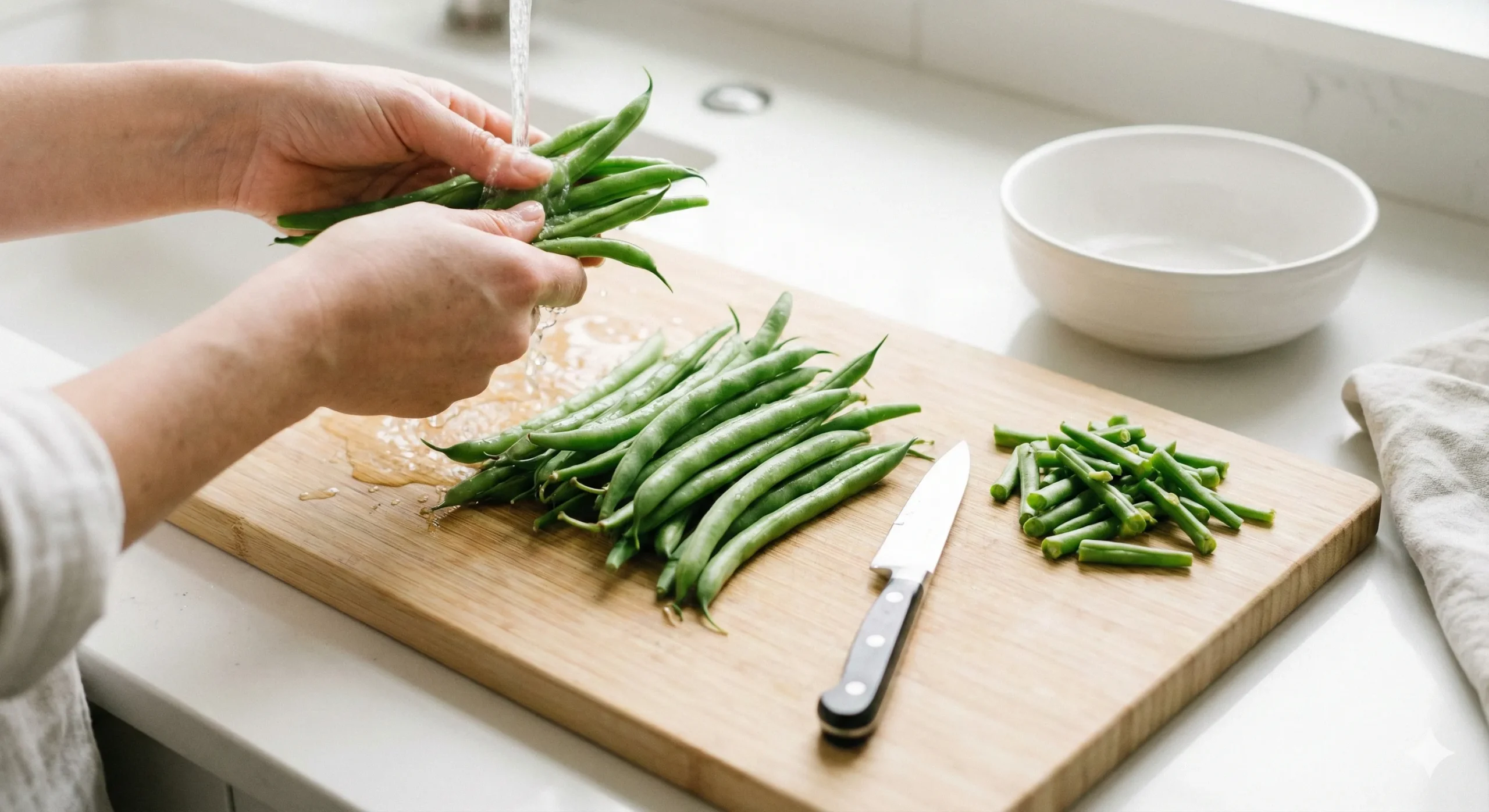
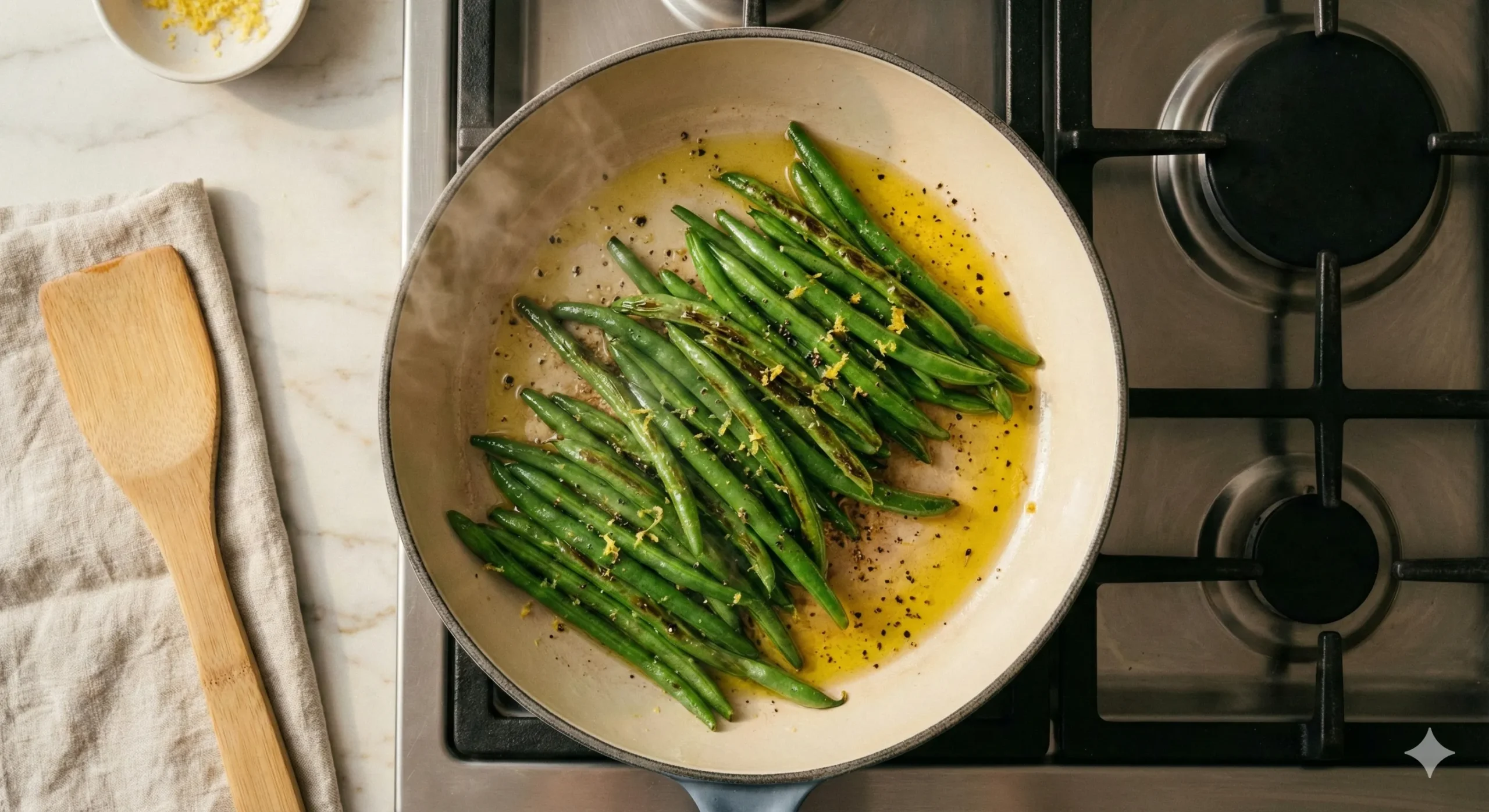
The green beans must be fresh—firm, bright, and eager to snap. Anything less will betray the spirit of the recipe. As I trim them, I still hear Nonna humming softly behind me, the sound of decades of kitchens wrapped into one breath.
Then comes the lemon zest: the true spell hidden in this dish.
I always zest it carefully, slowly, avoiding the bitter white pith. The scent rising from the grater is like inhaling memory itself—clean, sharp, promising. Lemon is the Sicilian sun made edible.
Finally, the Parmesan crumbs.
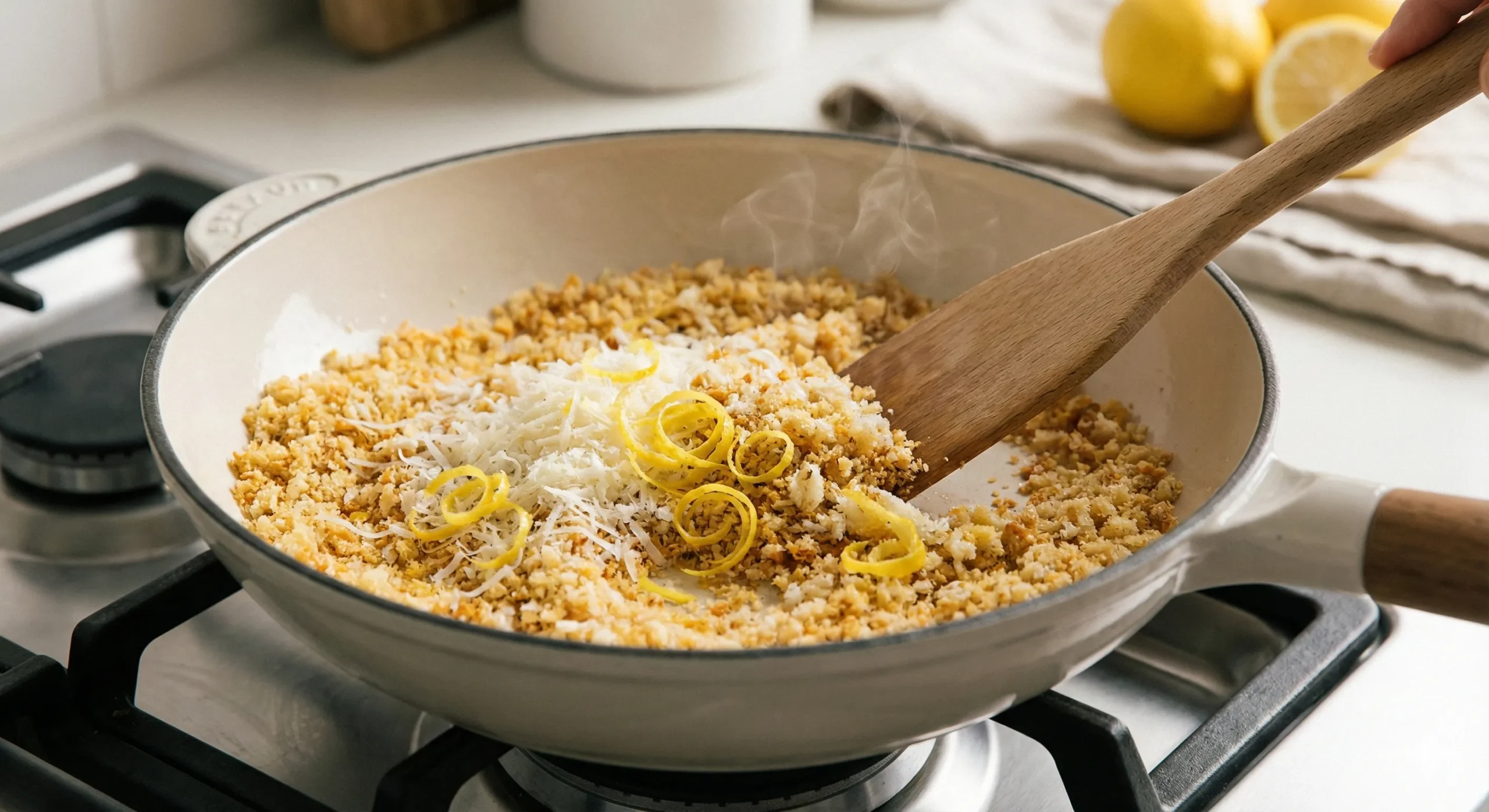
I toast them until they turn the color of old gold, releasing a nutty aroma that settles into the green beans like a warm embrace. Each bite becomes a small contrast—tender against crisp, bright against rich.
And of course, you can shape this magic however you need. Pecorino Romano adds a sharper edge, like a Sicilian breeze sweeping in. A dairy-free crumb still gives the satisfying crackle.
Because like all good Sicilian dishes, this one welcomes the cook into the story.