How to make Mafia-Style Vegetarian Ragù for Rigatoni


Introduction
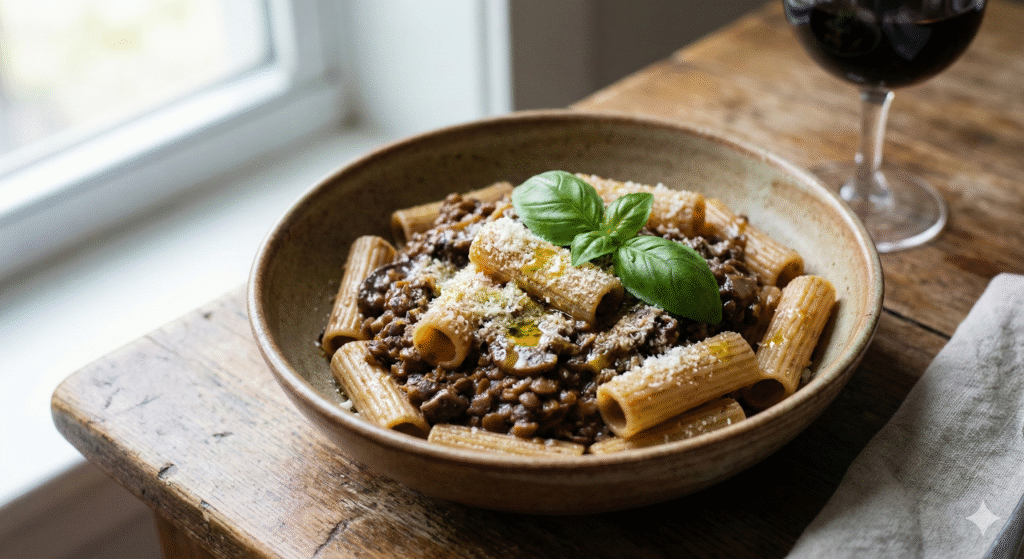
The Mafia-Style Vegetarian Ragù for Rigatoni is a hearty and robust dish that captures the essence of traditional Italian cooking with a modern, plant-based twist. This recipe brings together a rich blend of vegetables and lentils, simmered to perfection in a savory tomato sauce, seasoned with a touch of red wine, oregano, and just a hint of chili for those who like a little extra attitude in their meals. Served over rigatoni, this dish is a comforting plate of Italian goodness that is both nourishing and satisfying.
Origins and Cultural Significance
Italian cuisine is renowned worldwide for its simplicity, focus on high-quality ingredients, and timeless flavors. The term “ragù” traditionally refers to a meat-based sauce, slowly cooked to develop deep, rich flavors. Originating from Bologna, the ragù we commonly associate with Italian pasta dishes has evolved over centuries, with each region in Italy adding its unique spin. This vegetarian version pays homage to those time-honored traditions while catering to modern dietary preferences and environmental considerations. The use of the term “Mafia-Style” in this recipe is a playful nod to the rich, bold flavors typically associated with Sicilian and Southern Italian cooking, which is often depicted in popular culture. By invoking the infamous “Mafia,” the recipe suggests a dish that is daring, robust, and full of character, much like the legendary figures themselves. However, this ragù is far from criminal; instead, it is a celebration of vegetables and plant-based protein, creating a sauce that’s just as satisfying as the classic meat-based counterparts.
Unique Ingredients and Flavors
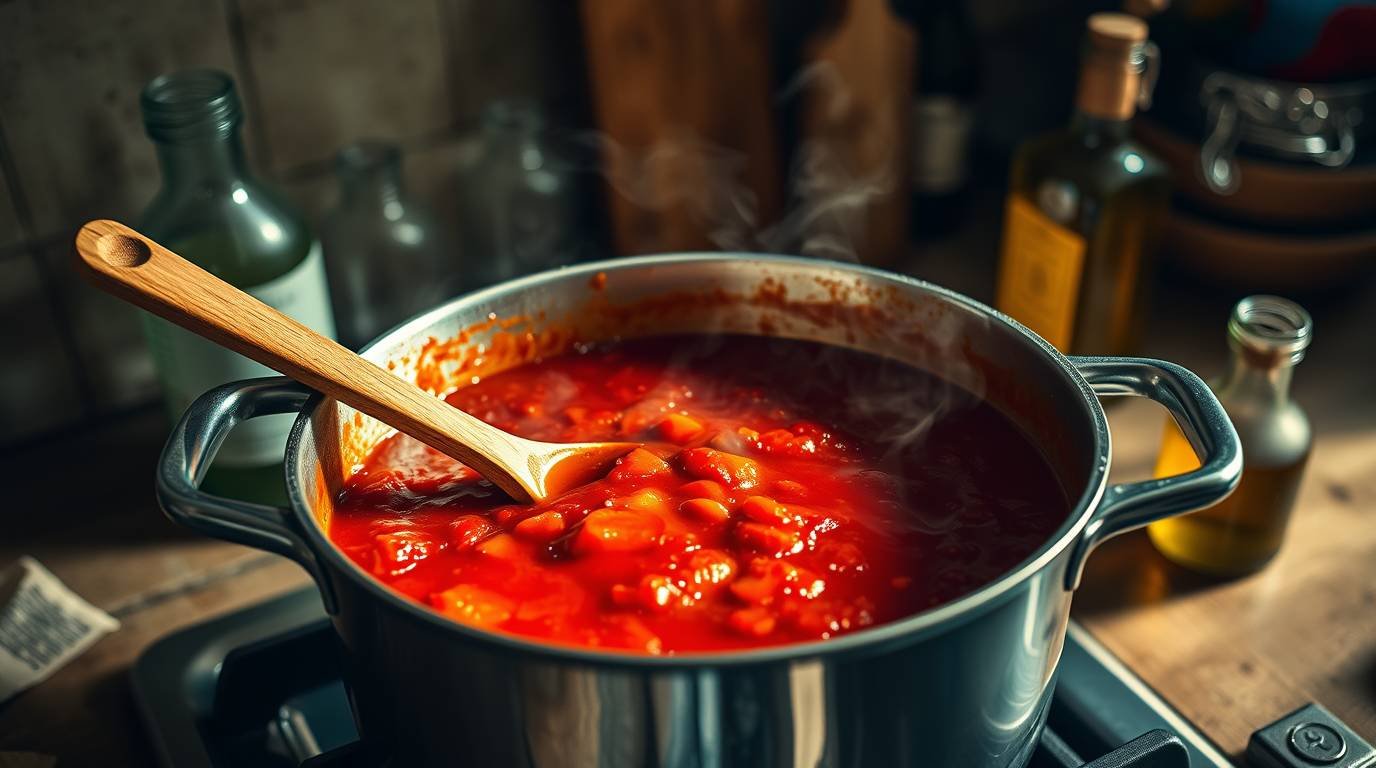
This vegetarian ragù leverages the natural umami found in mushrooms and lentils to create a depth of flavor that rivals any traditional meat sauce. Mushrooms, particularly cremini or portobello, are ideal for this dish due to their earthy flavor and meaty texture, which serve as the backbone of the ragù. Finely chopped mushrooms blend seamlessly with the aromatic base of onions, carrots, and celery, known in Italian cooking as a soffritto, to build a complex flavor profile. Lentils are another key ingredient in this recipe, providing not only plant-based protein but also a hearty texture that enhances the sauce’s richness. The inclusion of walnuts is an optional variation that provides a nutty undertone and an additional layer of complexity to the dish. Both options ensure that the ragù is satisfying and nourishing, making it an excellent choice for vegetarians and meat-eaters alike. The sauce’s foundation of crushed tomatoes and tomato paste is enlivened with a splash of red wine, which adds a subtle acidity and depth characteristic of traditional Italian sauces. Dried oregano and chili flakes contribute a fragrant herbal note and a touch of heat, respectively, rounding out the sauce’s flavor profile. This combination of ingredients ensures that each bite of the ragù is a harmonious blend of savory, tangy, and spicy elements.

Cooking Techniques and Tips
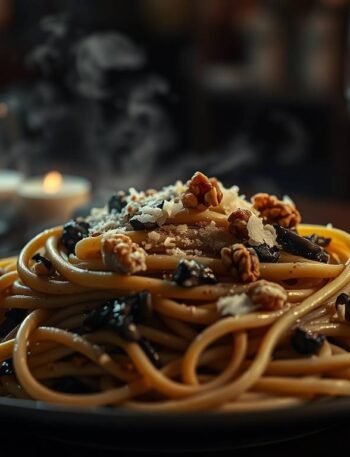
Creating the perfect ragù requires patience and attention to detail. The key to developing the sauce’s rich flavor lies in slowly sautéing the vegetables until they are tender and caramelized, allowing their natural sweetness to emerge. This technique is essential for building the sauce’s base and should not be rushed. Once the mushrooms and lentils are added, it’s crucial to allow the mixture to cook down, letting the flavors meld together. Adding red wine at this stage deglazes the pan, lifting any caramelized bits and infusing the sauce with its rich, robust character. Allowing the sauce to simmer gently ensures that all the ingredients have time to marry, resulting in a ragù that is both flavorful and harmonious. When it comes to serving, rigatoni is the pasta of choice for this dish. Its ridged surface and tubular shape are perfect for capturing and holding the sauce, ensuring that each bite is a delightful combination of pasta and ragù. For an added touch of authenticity, finish the dish with freshly grated Parmesan or a vegan alternative, providing a final layer of savory goodness. In conclusion, the Mafia-Style Vegetarian Ragù for Rigatoni is a dish that celebrates the best of Italian cooking. It combines traditional techniques and ingredients with a contemporary, plant-based twist, resulting in a meal that is both delicious and wholesome. Whether you’re a long-time fan of Italian cuisine or new to the world of vegetarian cooking, this ragù is sure to impress and satisfy.
How to make Mafia-Style Vegetarian Ragù for Rigatoni
Description
Savor the robust flavors of mushrooms, lentils, and a splash of red wine in this vegetarian ragù, ideal for pairing with rigatoni.
Ingredients
Instructions
-
Chop the Vegetables
Finely chop the onion, carrot, and celery. Mince the garlic and set aside. Clean and finely chop the mushrooms.
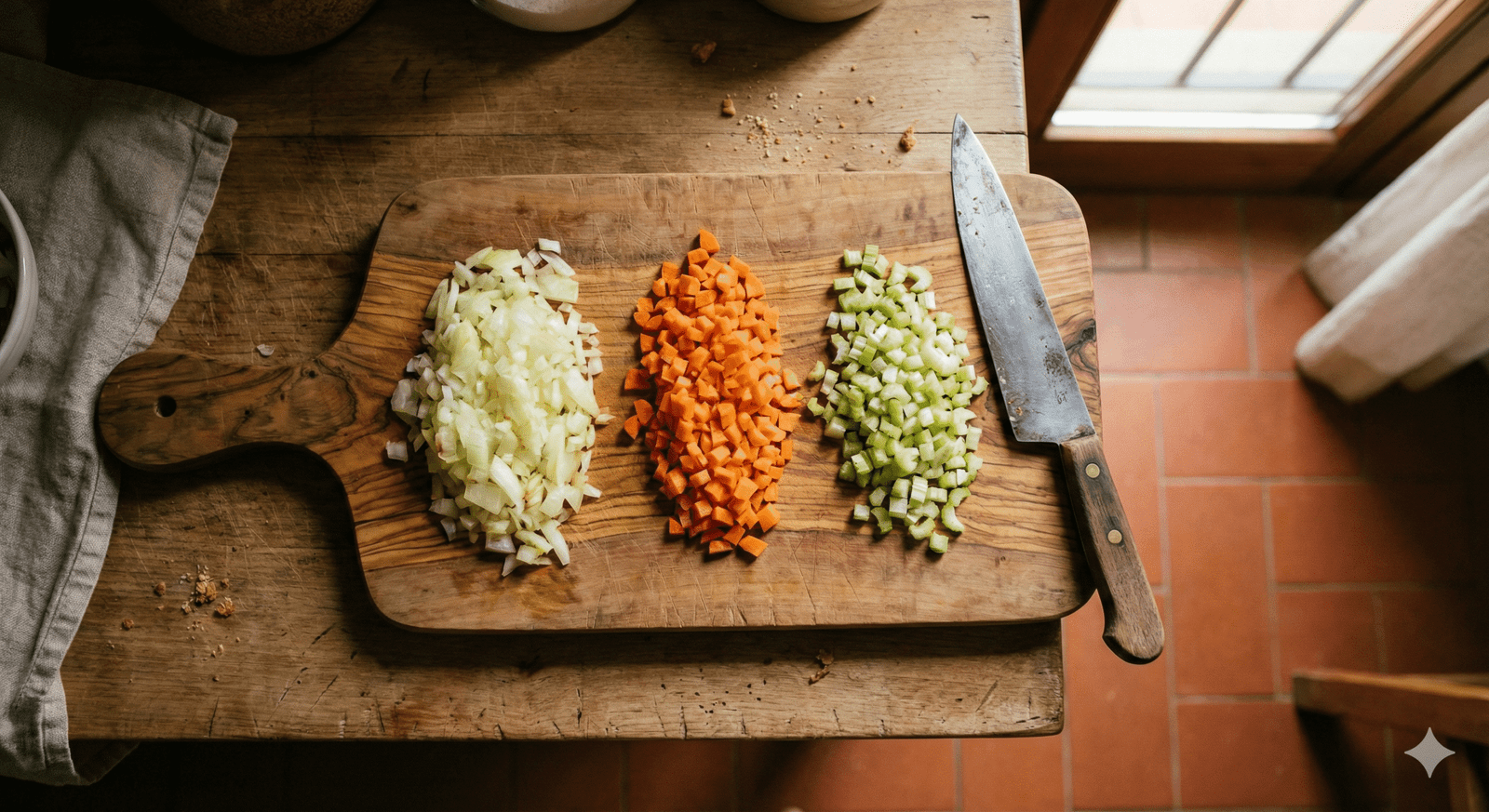 Ensure the vegetables are chopped uniformly for even cooking and a harmonious texture.
 -
Sauté the Aromatics
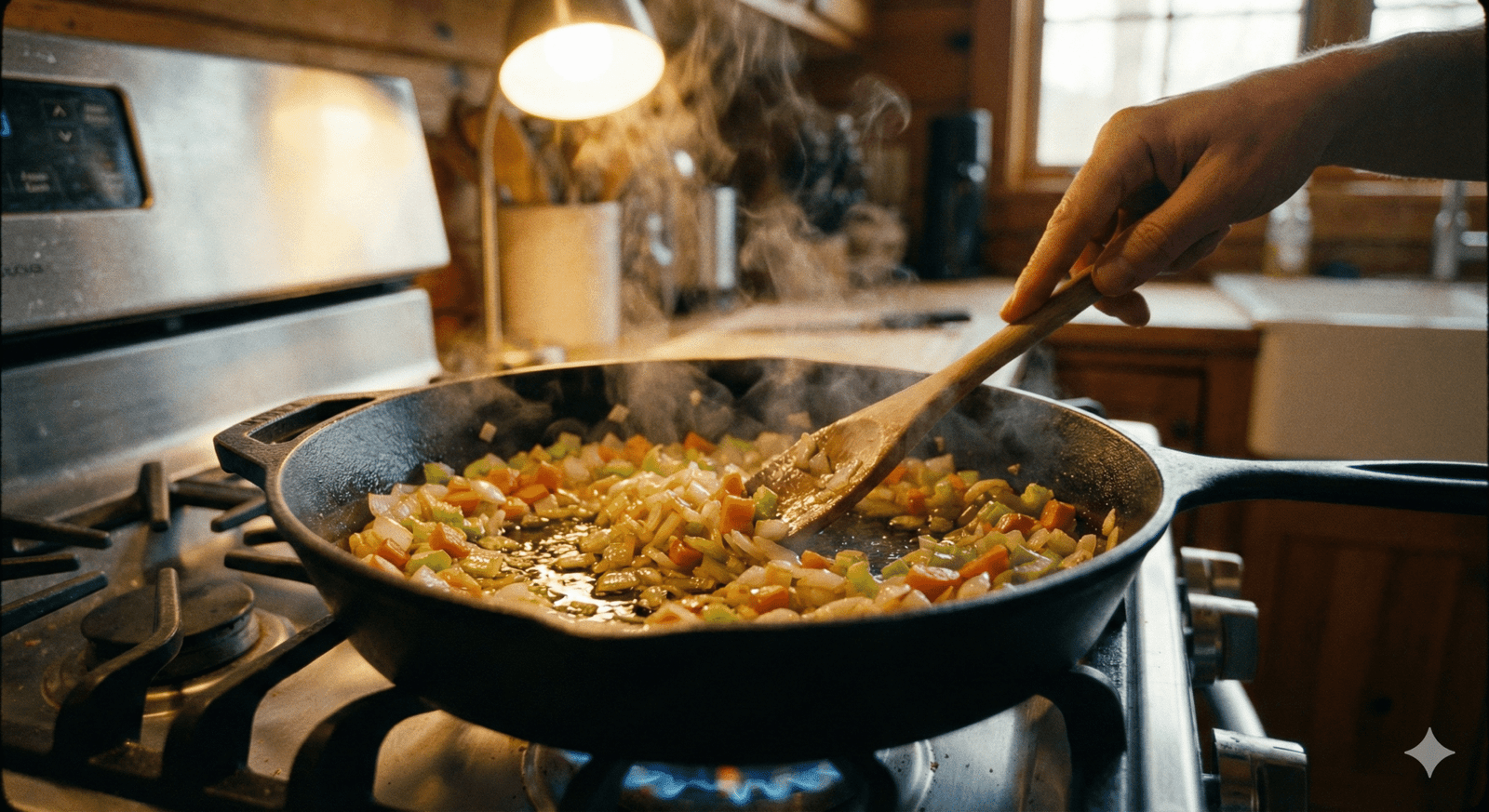
Heat the olive oil in a large skillet over medium heat. Add the chopped onion, carrot, and celery. Cook until the vegetables are softened and the onion is translucent (about 5–7 minutes).
-
Add Garlic and Mushrooms
Stir in the minced garlic and chopped mushrooms. Cook until the mushrooms release their moisture and begin to brown, about 5 minutes.
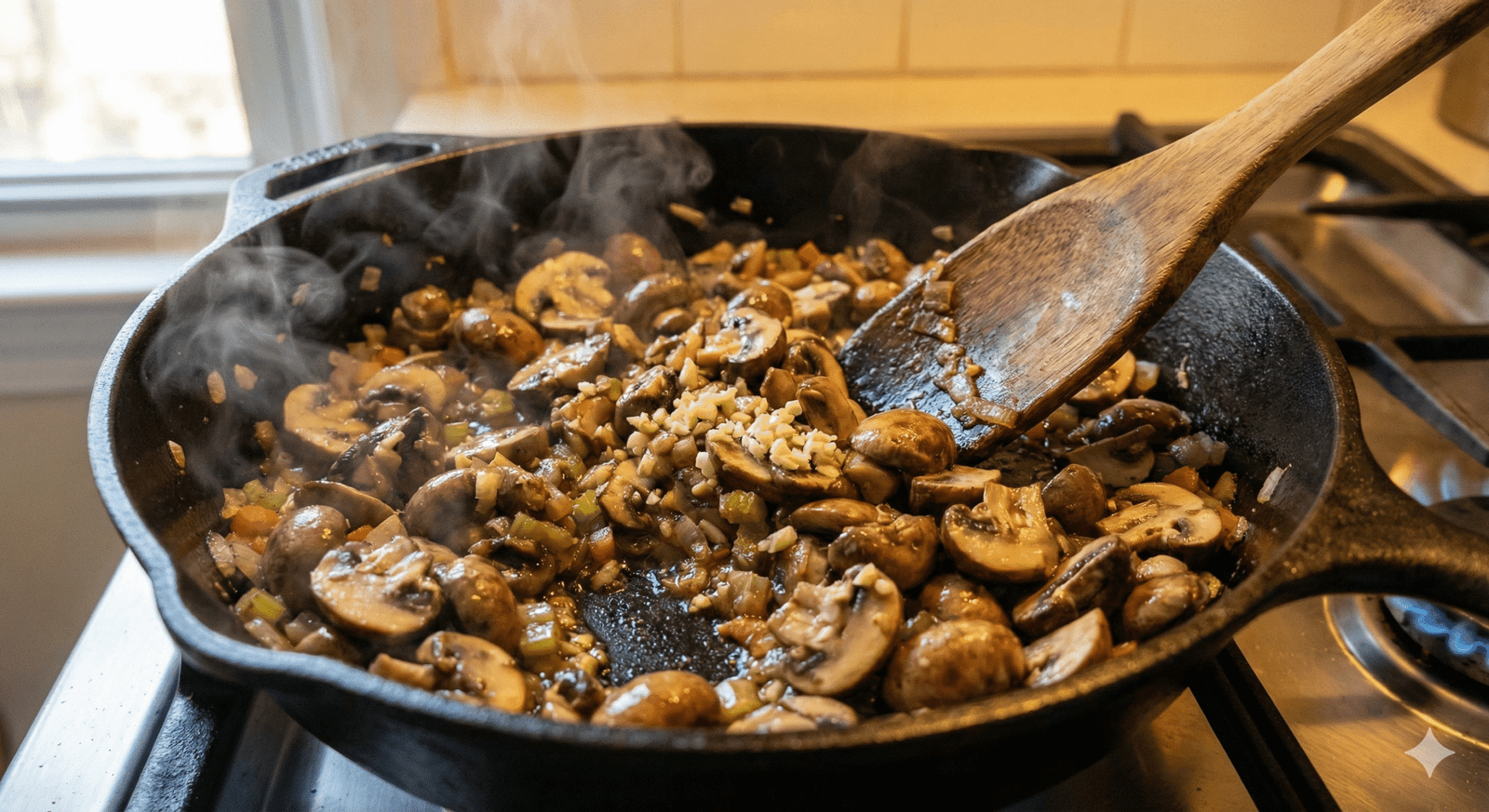 This step enhances the flavor, allowing the mushrooms to caramelize slightly.
-
Incorporate Lentils or Walnuts
Add the cooked brown lentils or finely chopped walnuts to the skillet, stirring to combine with the vegetables.
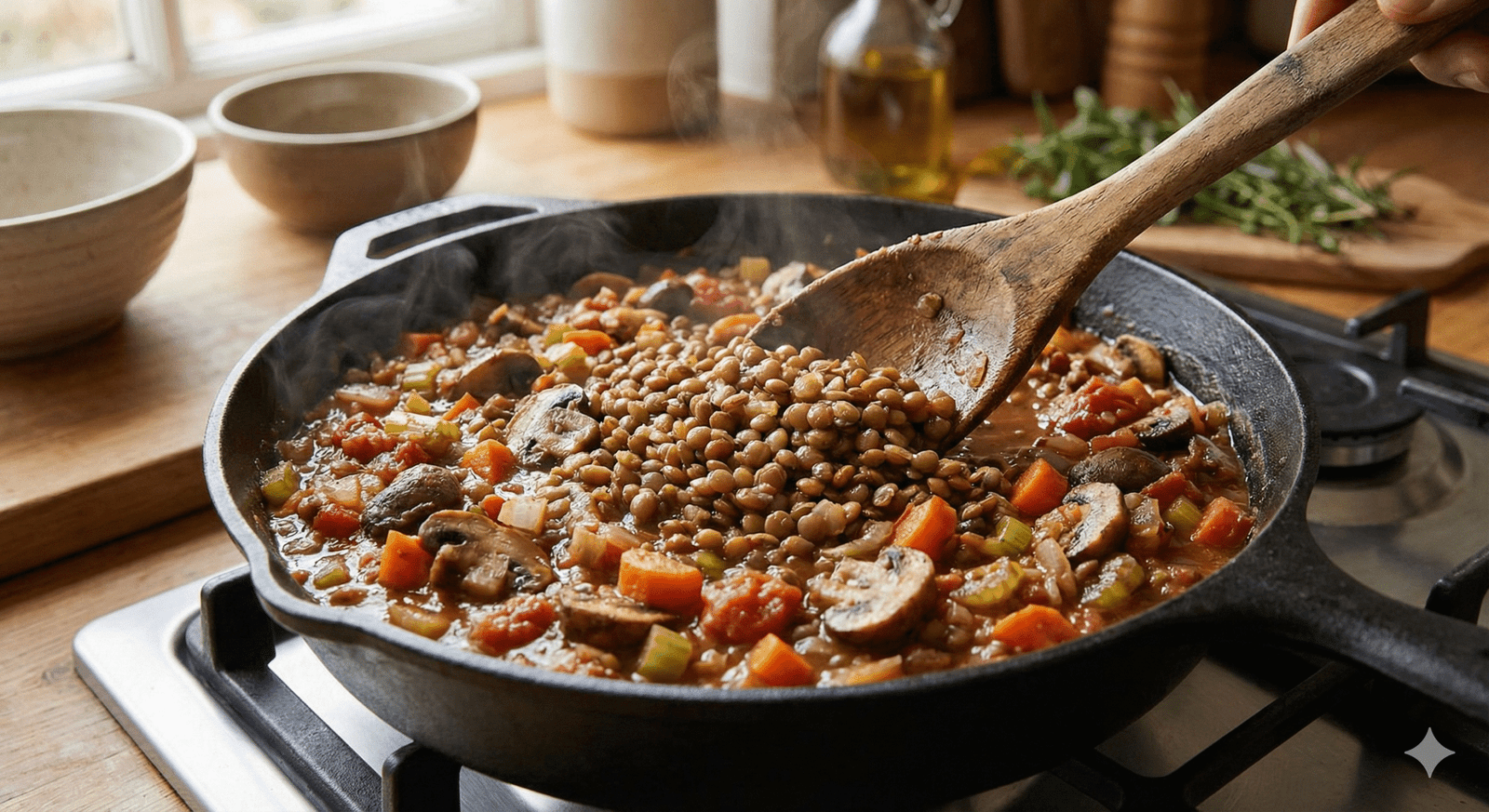 This provides the ragù with a hearty texture and additional protein.
-
Add Tomato Paste and Liquid
Stir in the tomato paste, ensuring it coats the vegetable mixture. Add the crushed tomatoes and vegetable broth. Mix well.
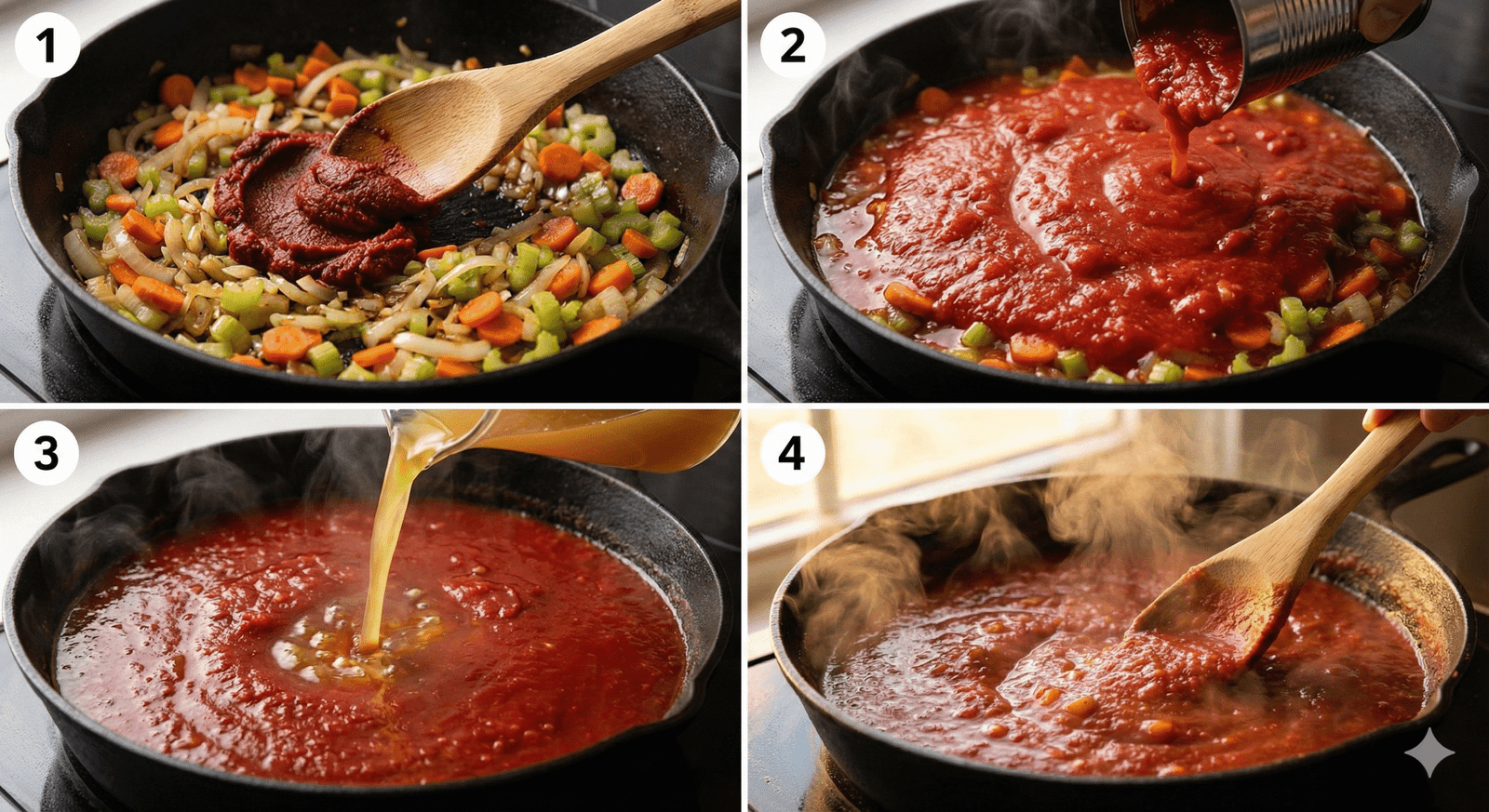 Tomato paste adds depth and richness to the sauce.
-
Prepare the Rigatoni
While the ragù is simmering, cook the rigatoni pasta in a large pot of boiling salted water according to package instructions until al dente.
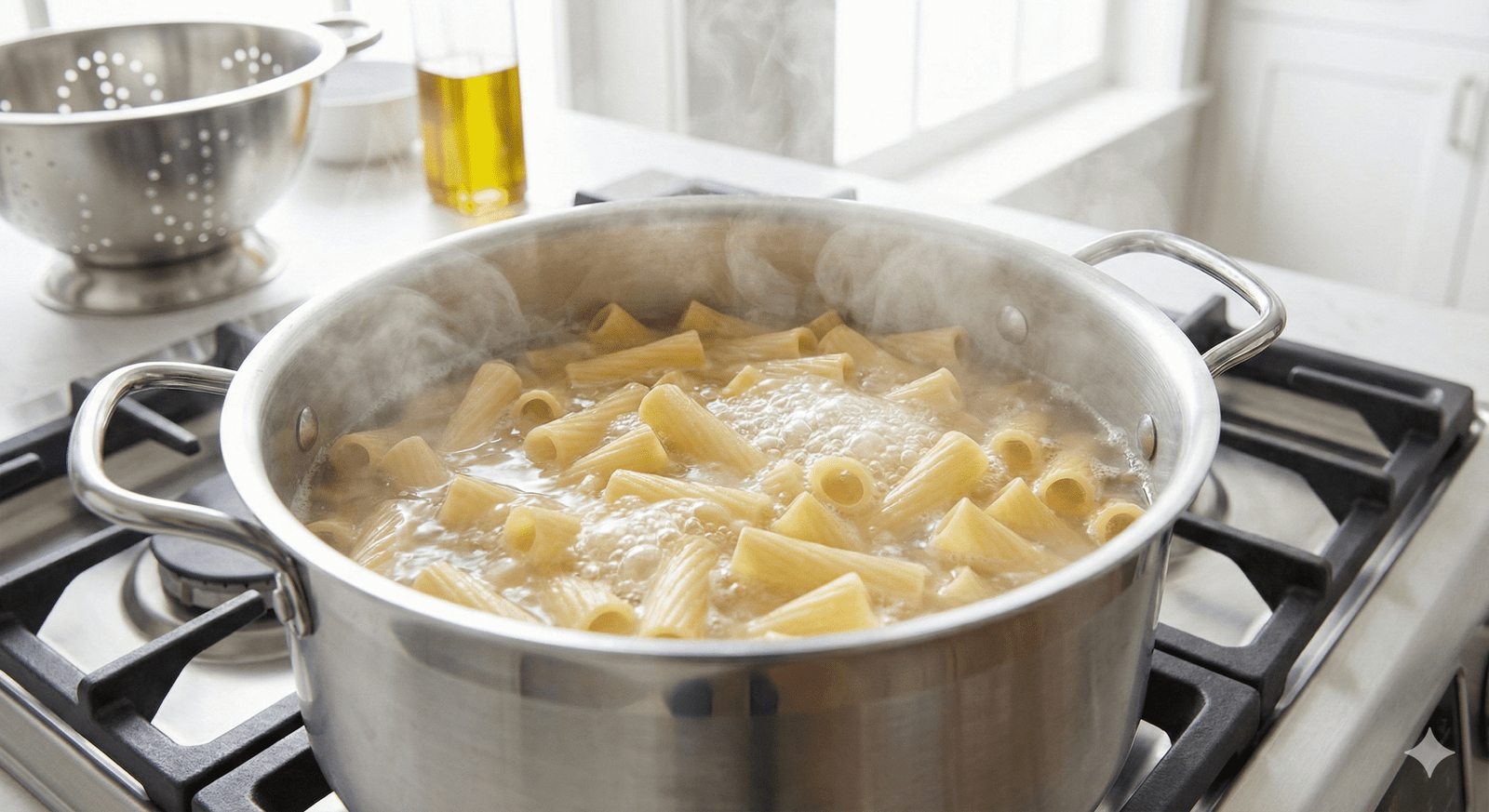 Make sure to reserve a cup of pasta water before draining, in case you need to loosen the sauce later.
-
Mix Pasta and Sauce
Add the cooked rigatoni to the skillet with the ragù. Toss to coat the pasta evenly with the sauce.
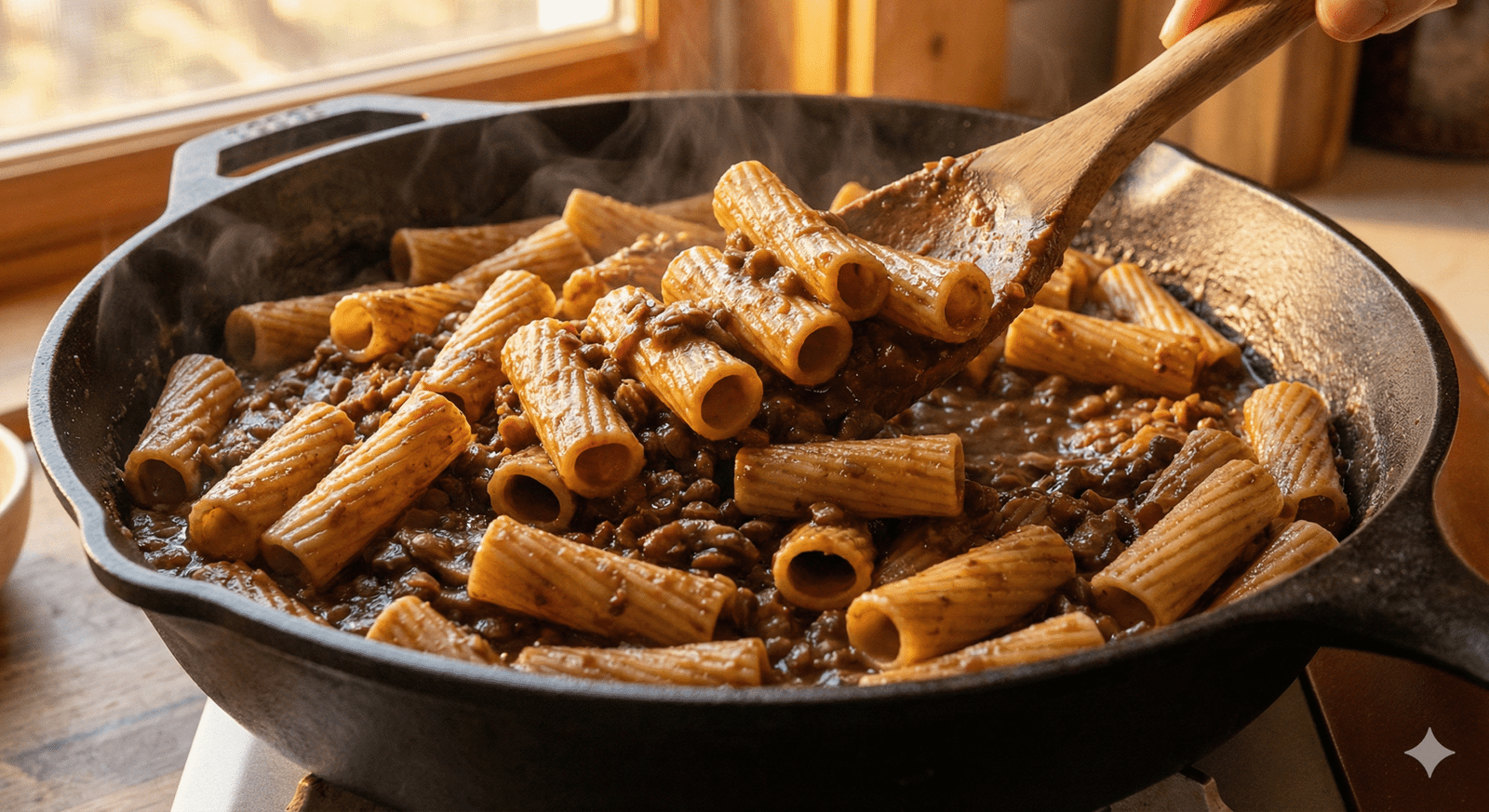 If the sauce is too thick, add a little reserved pasta water to reach the desired consistency.
Nutrition Facts
Serving Size 4
- Amount Per Serving
- Calories 1072.89kcal
- % Daily Value *
- Total Fat 52.12g81%
- Saturated Fat 6.79g34%
- Cholesterol 10.17mg4%
- Sodium 1532.37mg64%
- Potassium 3474.97mg100%
- Total Carbohydrate 107.23g36%
- Dietary Fiber 16.23g65%
- Sugars 31.17g
- Protein 29.69g60%
- Vitamin A 11230.65 IU
- Vitamin C 45.33 mg
- Calcium 309.62 mg
- Iron 8.26 mg
- Vitamin D 0.61 mcg
- Vitamin E 9.23 mg
- Vitamin K 44.37 mcg
- Thiamin 0.67 mg
- Riboflavin 1.46 mg
- Niacin 15.89 mg
- Vitamin B6 1.28 mg
- Folate 150.66 mcg
- Vitamin B12 0.22 mcg
- Pantothenic Acid 5.42 mg
- Phosphorus 641.16 mg
- Magnesium 195.99 mg
- Zinc 4.68 mg
- Selenium 72.68 mcg
- Copper 2.18 mg
- Manganese 2.69 mg
* Percent Daily Values are based on a 2,000 calorie diet. Your daily value may be higher or lower depending on your calorie needs.
Note
To elevate the flavor profile, ensure your vegetables are finely chopped to promote even cooking and texture. A soffritto base of onion, carrot, and celery is crucial for depth, so take the time to sauté it until soft and slightly caramelized. Opt for cremini or portobello mushrooms for their rich umami; chop them finely to mimic the texture of traditional meat-based ragù. Lentils or walnuts provide heartiness; if using lentils, ensure they are cooked to a firm texture to maintain the sauce's integrity.
Tomato paste is essential for a concentrated tomato flavor; cook it briefly to remove rawness. A splash of red wine can enhance the sauce's complexity; let it reduce to intensify the flavors. Season judiciously with salt, pepper, and oregano, adjusting to taste. For a touch of heat, incorporate chili flakes, but do so sparingly to maintain balance.
When cooking the rigatoni, ensure it is al dente to hold up against the robust ragù. Finish the dish with freshly grated Parmesan or a vegan alternative, taking the cheese's salt content into account when finalizing the seasoning. The result should be a harmonious blend of flavors and textures that embodies the spirit of a classic Italian ragù while remaining distinctly vegetarian.
Pin this recipe to share with your friends and followers.

Frequently Asked Questions
Q: How can I store the leftovers?
A: Leftovers can be stored in an airtight container in the fridge for up to 3 days. Reheat thoroughly before serving.
Q: Can I substitute an ingredient?
A: Yes, you can substitute brown lentils with finely chopped walnuts or vice versa for different textures.
Q: What should I serve this with?
A: This dish pairs well with a simple green salad or garlic bread.
Q: Is there a vegan alternative to Parmesan?
A: Yes, you can use nutritional yeast or a store-bought vegan Parmesan alternative.
Q: Can I make this recipe spicy?
A: Absolutely, you can increase the chili flakes or add a pinch of cayenne pepper for extra heat.

You may also like...